
Maps / Navigation Archive

Find your bearings before you move.

GameBaseHub is an independent Delta Force map-and-navigation archive for Australian and international players. Use it to orient yourself, plan a route around a practical task, compare landmarks, and open connected guides without treating editorial judgement as official documentation.

Each record is built for quick scanning: look for mode relevance, a concise problem statement, review context and confidence labels before using it. Where documentation supports it, a record can point to orientation, approaches or extraction-related context. Where the archive offers strategy, it is marked as advice and linked to relevant Operations, Warfare, weapons, builds and walkthroughs.

  • Orientation and landmark reading
  • Route context and linked guide discovery
  • Mode relevance and review context
Oblique aerial view of an unnamed rugged landscape with ridges and a winding road.
Terrain reading contextCoordinate reference / visual only

Archive discovery console

Find a map record

Search published map intelligence by map name, landmark, mode, route type or guide topic. Filters only refine the records currently available in this archive, so results remain clear about what has been published and reviewed.

Every document row shows its category, player question, review context, confidence status and connected content types before you open it.

Documentation convention

How to read a map guide

Labels make it easier to see where a record reports documented context and where it offers a practical interpretation for players.

01

Confirmed / source checked

Confirmed facts are documented

CONFIRMED and SOURCE CHECKED are reserved for information editors have documented against available reliable references or clearly attributable in-game evidence. The label communicates GameBaseHub’s documentation status, not official authority. Check the record’s review or update context too: a careful label is most useful when it sits beside the scope that tells you where the information applies.
02

Editorial view / field note

Editorial routes are recommendations

FIELD NOTE and EDITORIAL VIEW identify player-facing interpretation: a route preference, pacing idea or risk-management suggestion. These notes can still be useful, but they should be compared with your squad, loadout, objective and current mode. They are not fixed mechanics, and they may change as players learn more or an update changes the context around a route.

03

Current intelligence

Update context matters

Before relying on advice, check the visible review date and any season or version context supplied with the record. This matters especially for MELTDOWN-tagged coverage: use its stated context as a practical check, rather than treating temporary guidance as permanent map knowledge. The archive does not assume that an older route note remains suitable after an actively updated game changes.

Mode relevance
Shows the context a record is written for, so a reader does not apply it to the wrong mode.
Difficulty
An editorial reading or execution aid, never an official in-game rating.
Route risk
Editorial context unless a specific documented fact is clearly identified.
Review date
Indicates when the record was last assessed and helps readers judge update sensitivity.
Linked guides
Contextual paths to Operations, Warfare, Operators, weapons, builds or walkthroughs.

Editorial planning framework

Build a safer route plan

Use these field notes as a repeatable preparation framework, not as a claim that one path is always best.

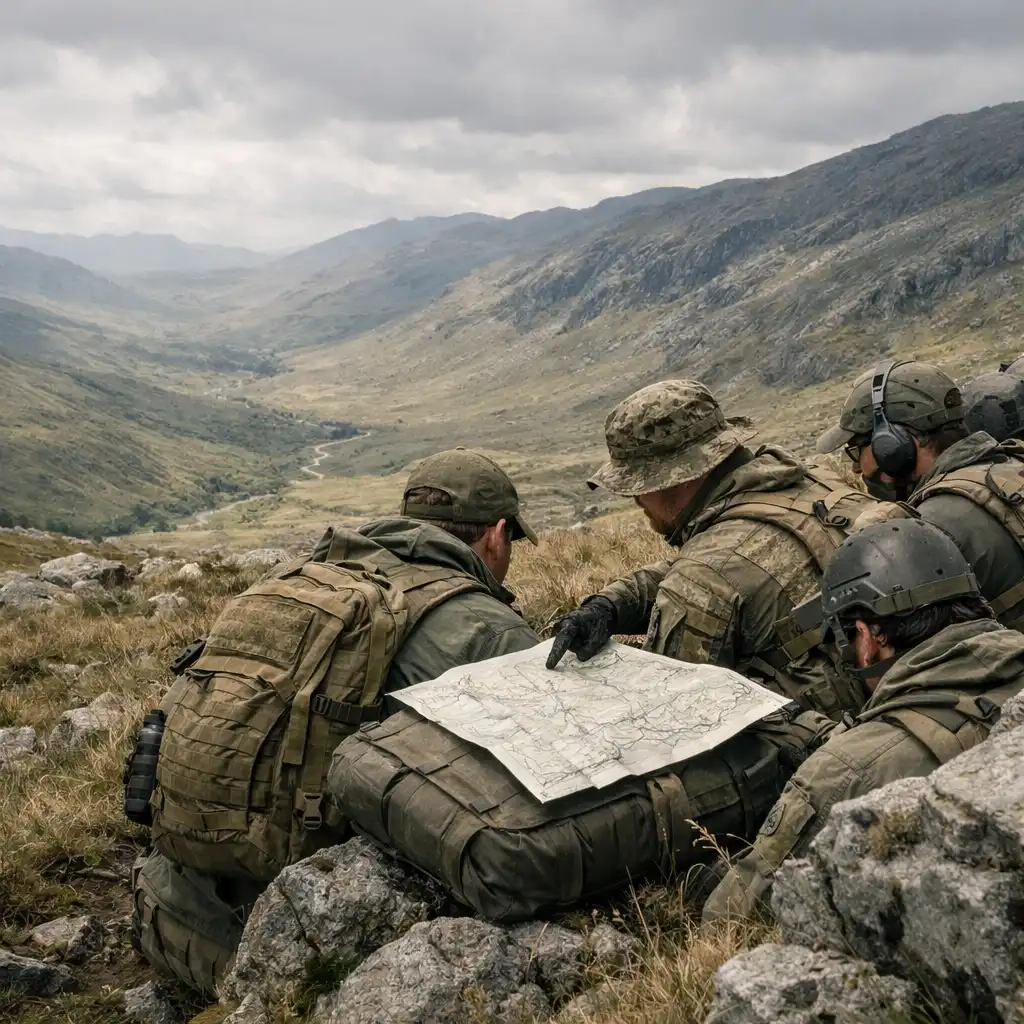
A small squad studies a paper terrain chart in an unnamed highland landscape.
Editorial planning scene; not evidence of a named route or location.
A1

Field note

Start with the objective

Define the immediate task before selecting a route: learning the map, reaching a known area, supporting a squad or leaving safely when a documented option is available. A route should serve that task rather than chase a single “best” path. Treat this as editorial advice and reassess it when your objective changes.

A2

Field note

Use stable reference points

Choose recognisable terrain, built structures or map labels that you can cross-check against a guide instead of relying on vague direction calls. Keep a starting reference and a next reference point. When a guide supplies terminology, use that displayed language for clearer squad callouts rather than assuming a landmark exists elsewhere.

A3

Field note

Treat risk as contextual

A route’s safety depends on mode, timing, squad intent, player knowledge and changing conditions. Review the record’s mode relevance and updated date before treating route risk as useful advice. Consider the wording as editorial context unless the record separately documents a specific fact; the archive does not quantify danger or predict behaviour.

A4

Field note

Keep a fallback route

Make a simple contingency plan: return to a known reference, regroup, or consult a linked guide rather than overcommitting to unfamiliar ground. This is useful for solo readers and squads without assuming any particular mode rule. Connected walkthrough, Operations and Warfare records can help you reset the next question.

Archive specimen

Anatomy of a useful map record

This demonstration uses visible placeholders so the record structure is clear without inventing a map, date, relationship or game detail.

01 / Record header

[Mode relevance] / [Content type]

[Map record title]

[Published record summary: the player problem this guide is designed to address.] Scope helps readers avoid applying guidance to the wrong mode.

Confirmed / source checked

[Documented information appears here, with its visible review-date field and context.]

Editorial view

[Route interpretation or planning advice appears here and is not presented as documentation of mechanics.]

Difficulty: [editorial context]Route risk: [editorial context]Last reviewed: [placeholder]

Start by context

Navigate by mode and mission type

Choose the archive path that best matches your immediate question, then check each resulting record for its stated scope and review context.

Operations / map intelligence

Operations map intelligence

Look for Operations-related map and extraction context through filtered records and connected Operations guides. Availability and practical guidance should always be checked against the update context shown in the individual record, rather than assumed from a broad category label.

Explore Operations

Warfare / navigation intelligence

Warfare navigation intelligence

Use Warfare-filtered records when you need broader orientation and movement guidance. This route is for finding published material with a stated relevance, not for prescribing tactics or assuming objectives, match rules or map inventory that the record does not document.

Explore Warfare

Foundations / walkthroughs

Foundations and walkthrough links

Newer players can begin with beginner resources, walkthroughs and general navigation guidance before opening a mode-specific record. This is a learning path, not an official onboarding flow, and it keeps a clear return route to the full map archive.

Open guide foundations

Pre-departure sheet

Map guide checklist

Use these checks while consulting a record. They improve your reading process but do not make a route safe or guarantee an outcome.

Source checked

Source-checked checks

Check the record scope, mode relevance, review date, and any version or season context provided. Review the linked source status before treating information as documented. These are checks of the guide’s documentation, not guarantees about every in-game situation; they simply help you judge whether the record matches the question in front of you.

Field note

Editorial planning checks

Clarify your objective, squad communication, usable reference points and fallback plan. Ask whether the route advice suits your current confidence level and whether its update context is still useful. These are editorial planning prompts, not mechanics, timings or loadout claims, and they are worth revisiting whenever the context changes.

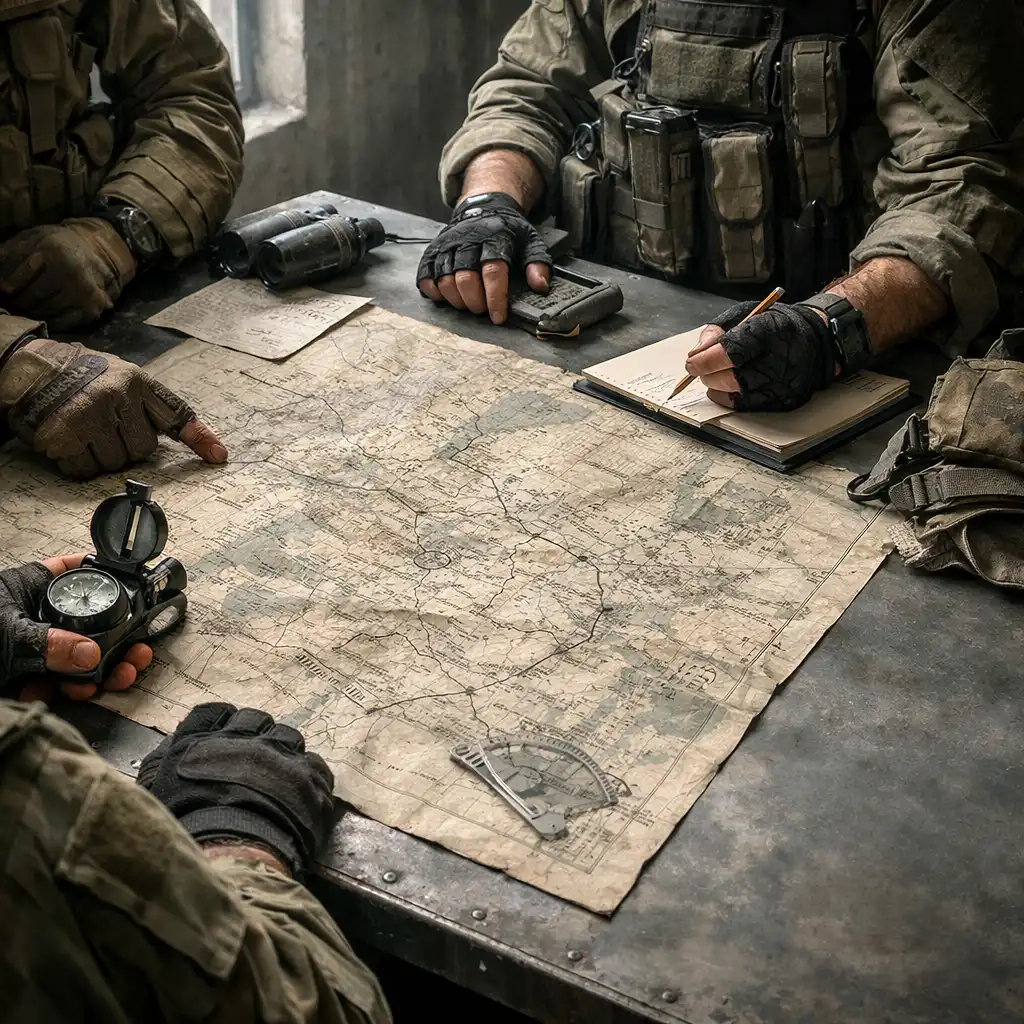
A non-identifying tactical squad plans around paper maps on a table.
Planning context only; no specific map, Operator, weapon or mission is identified.

Connected tactical records

Explore connected tactical records

Map records remain focused on orientation and navigation. Where practical context helps, the archive can connect readers to another document category.

Operators
Operators and squad roles

Applicable map records may link to Operator material when team coordination or role considerations need context. These are discovery paths, not a claim that any specific Operator is required.

→
Weapons / Builds
Weapons and builds

Connected weapon or build guidance can support comparison of practical considerations. Recommendations remain visibly editorial, and readers should check the linked record’s confidence label and review context.

→
Walkthroughs
Walkthroughs and mission context

Walkthroughs can help with task sequencing and broader context, while map records remain the place to solve orientation and navigation questions.

→

Editorial method

Map intelligence standards

01

Practical, scannable records

Records use structured headings, metadata, difficulty context, update dates and linked documents so players can assess a guide quickly. The archive organises information around a specific player question rather than claiming universal coverage.

02

Clear confidence labels

CONFIRMED, SOURCE CHECKED, EDITORIAL VIEW and FIELD NOTE remain visibly distinct. Route recommendations are not presented as official fact, and update context remains part of responsible use.

03

Updates with context

Date-sensitive records show their last review and relevant season or version context where available, especially when coverage refers to MELTDOWN. Actively updated games require readers to check that context before acting.

Archive intake

Request map intelligence

Request a map topic, flag a record that may need review, or suggest a clearer navigation question for the archive. Helpful requests include the mode, the task and the information that appears to be missing. GameBaseHub cannot promise publication, response times or immediate corrections.

Use this compact form to help editors understand the archive gap. No sensitive information is needed for a base request.